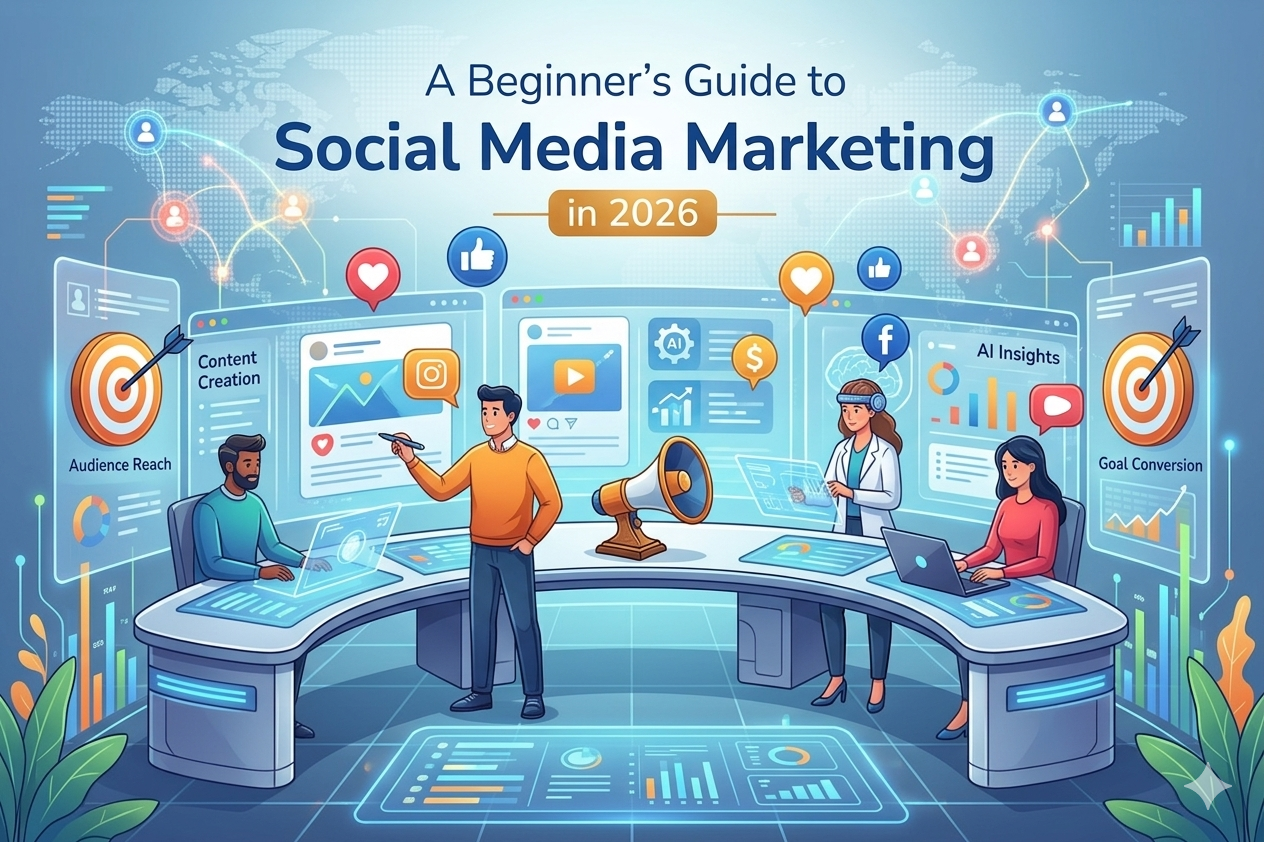
Social media marketing is no longer just an optional marketing tactic—it has become one of the most powerful tools for building brands, generating leads, and driving consistent business growth. In 2026, with the rise of AI, automation, and data-driven marketing, businesses that adopt smart strategies are outperforming competitors and capturing massive online attention.
Whether you’re a startup, a small business owner, or an established company, understanding how to use social media marketing effectively can transform your online presence and revenue.
Social media marketing refers to the process of promoting your brand, products, or services using platforms like Instagram, Facebook, LinkedIn, Twitter (X), and YouTube.
It helps businesses to:
- Increase brand awareness
- Generate leads and sales
- Drive traffic to websites
- Build strong customer relationships
A professional agency uses tools, analytics, and smart strategies to manage campaigns, create content, and improve performance.
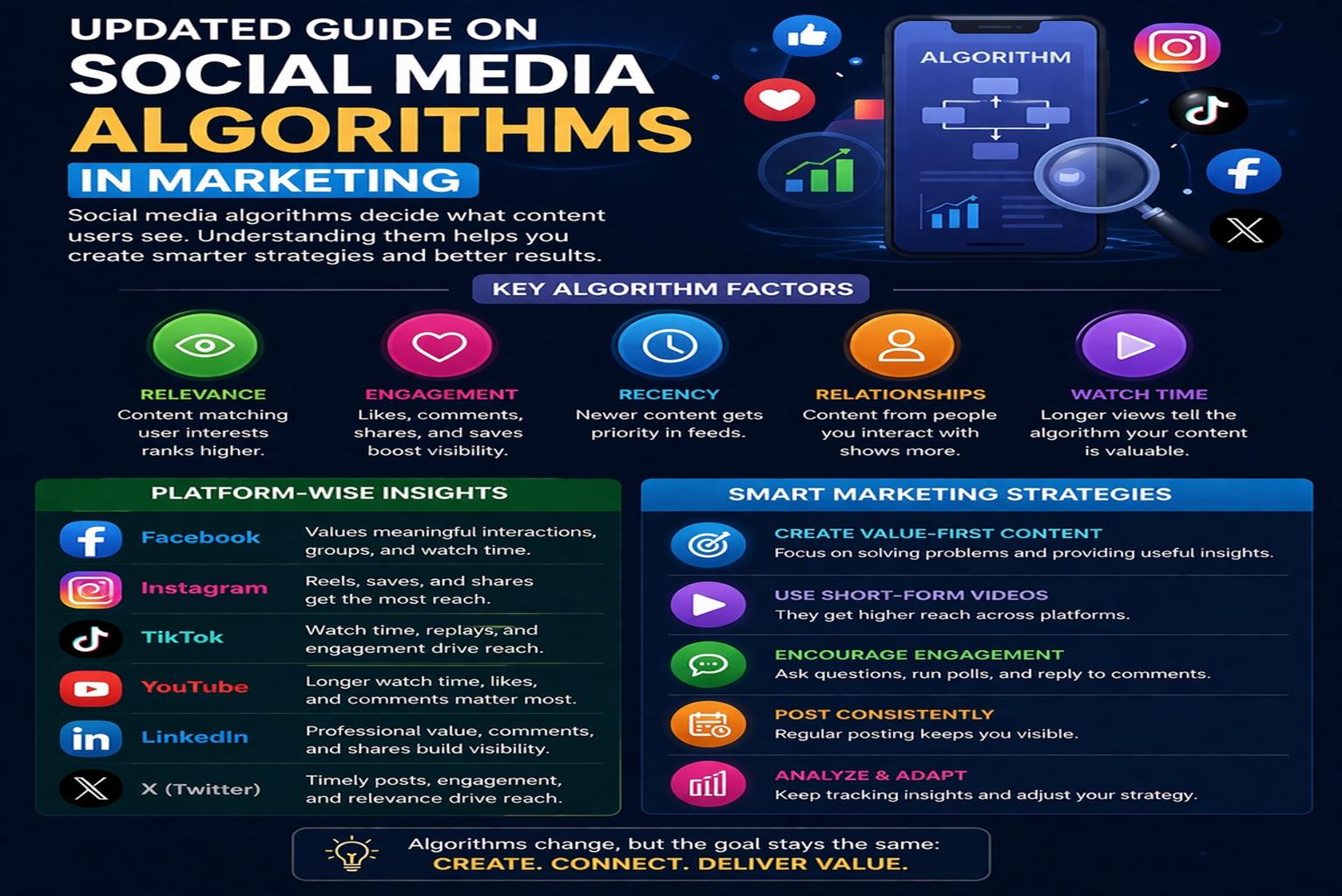
Social media algorithms are designed to track and understand user behavior in real time. They analyze actions such as what users watch, like, comment on, share, and how long they engage with a post. Based on these signals, platforms decide which content should appear at the top of the feed.
The main goal of these algorithms is to keep users engaged for as long as possible. To achieve this, they evaluate multiple factors such as relevance, recency, user relationships, and content format (videos, reels, images, etc.). Over time, the system becomes smarter and builds a personalized feed based on user interests, which increases engagement and time spent on the platform.
In simple words, algorithms observe user behavior and show more of the content they interact with the most.
The content you see on social media is based on your activity and interaction patterns. If you spend more time watching a specific type of post—even out of curiosity—the algorithm considers it your interest.
For example, if you watch a video for a longer duration, the platform assumes you liked it. As a result, you will start seeing similar content after a few scrolls. This happens because the algorithm continuously learns and updates your feed accordingly.
For marketers, this means creating highly engaging, relevant, and audience-focused content is essential to reach more people and grow consistently.
Essential Social Media Marketing Terms Every Beginner Must Know
To build a successful strategy, understanding key terms is very important. These concepts help you create better content and measure performance effectively.
1. Content
Content includes everything you post—text, images, videos, reels, and infographics. It is the backbone of social media marketing. High-quality and relevant content attracts users and builds engagement.
2. Video Content
Video is one of the most powerful formats today. It is engaging, easy to consume, and highly shareable. Short-form videos like reels and shorts are especially effective and will dominate social media in 2026.
3. Images & Visual Content
Visual content includes graphics, photos, and infographics. These help explain ideas quickly and make your posts more attractive and engaging.
4. Reach
Reach is the number of unique users who see your content.
- Organic Reach: Without paid promotion
- Paid Reach: Through ads
5. Engagement
Engagement includes likes, comments, shares, and clicks. High engagement means your audience finds your content valuable.
Benefits of Social Media Marketing
Social media is one of the most cost-effective marketing channels. Businesses can promote their products and services at a lower cost while generating consistent leads and sales.
It also helps in building a loyal audience. When users follow your page, you can regularly connect with them and promote your offerings. Additionally, social media provides valuable insights into customer behavior, helping you create more targeted campaigns.
Using advanced tools and analytics further improves performance and increases return on investment.
Top 5 Tips for Better Results
1. Know Your Audience
Understand your audience’s interests, behavior, and needs.
2. Set Clear Goals
Use SMART goals—Specific, Measurable, Achievable, Relevant, and Time-bound.
3. Choose the Right Platforms
Focus on platforms where your audience is most active.
4. Focus on Quality Content
Create valuable, engaging, and visually appealing content.
5. Stay Consistent
Post regularly and at the right time to maintain engagement.
Final Thoughts
Social media marketing may seem challenging at first, but with the right strategy, it becomes much easier. Continuous learning, consistency, and adapting to new trends are the keys to long-term success.
Whether you manage it yourself or work with experts, focusing on improvement and staying up to date with algorithm changes will help you achieve better results and grow your business effectively.
Read Also: How AI is Dramatically Changing Consumer Behaviour in 2025
FAQs
Social media marketing is the process of promoting your brand, products, or services through platforms like Instagram, Facebook, LinkedIn, and YouTube. It works by creating and sharing content, engaging with users, and running campaigns to increase brand awareness, traffic, and sales.
In 2026, social media marketing is essential because most customers are active online. It helps businesses reach a wider audience, build trust, generate leads, and stay competitive using modern tools like AI and data-driven strategies.
A successful strategy includes understanding your audience, setting clear goals, choosing the right platforms, creating high-quality content, and maintaining consistency. Tracking performance and optimizing campaigns are also important.
- What is the difference between reach and engagement?
Reach refers to the number of people who see your content, while engagement measures how users interact with it through likes, comments, shares, and clicks. Both are important for measuring campaign success.
Beginners can start by selecting the right platform, creating valuable content, and posting consistently. Learning from online tutorials, analyzing competitors, and gradually improving strategies can help achieve better results over time.
For expert insights on branding and business strategy, visit Manjeet Madhukar’s official website.